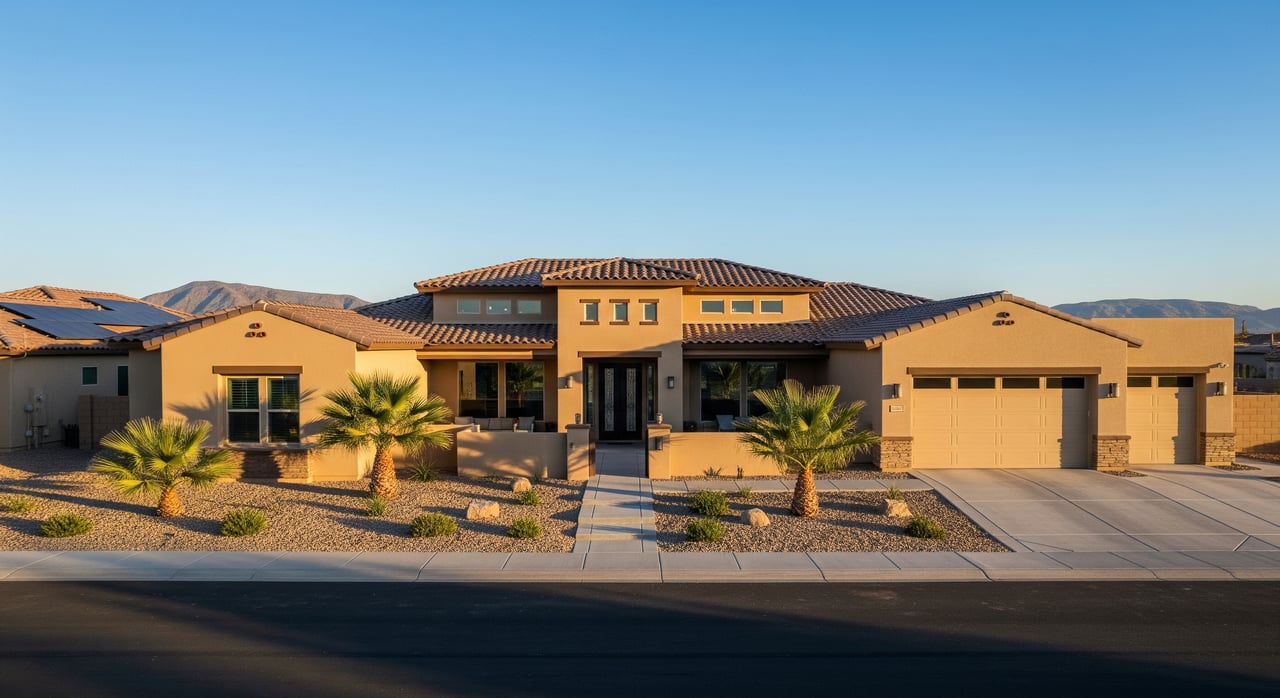
Thinking about buying your first rental outside Phoenix or SoCal? Yuma’s lower entry prices and steady demand from military, agriculture, and winter visitors can make single-family rentals a smart starting point. If you are new to underwriting, the steps and numbers can feel fuzzy. This guide gives you a simple, repeatable framework to screen Yuma deals, with example rent ranges, expense assumptions, and cap-rate math you can use today. Let’s dive in.
Why Yuma single-family rentals
Yuma is a smaller, more affordable Arizona market compared with Phoenix, and far cheaper than coastal Southern California. The economy blends military, agriculture, and seasonal tourism, which supports both year-round and winter demand for housing. Marine Corps Air Station Yuma and Yuma Proving Ground foster steady rental need from active-duty personnel and civilian contractors. Seasonal visitors boost occupancy in winter, while agriculture adds periodic demand on the lower-rent side.
Plan for some seasonality in vacancy and turnover. Appreciation has historically trailed faster-growing metros, so focus on cash flow and yield rather than short-term price gains. If you buy from out of the area, assume you will use a property manager and budget accordingly.
Price bands and rent ranges
Typical price bands
Investors often sort Yuma SFRs into three broad groups for screening:
- Lower-end SFRs: older, smaller 2–3 bedroom homes that may need updates. Entry pricing but higher ongoing maintenance risk.
- Mid-market SFRs: typical 3 bedroom, 1–2 bath homes in working-class areas. These make up a large share of investor purchases.
- Upper small SFRs: newer or remodeled 3–4 bedroom homes with higher acquisition costs, and potentially lower maintenance.
Always verify current prices with recent closed sales in the same area, with similar beds, baths, age, and lot size.
Example rent ranges
The best rent predictor is bedroom count. Use multiple sources for comps and adjust for seasonality. The figures below are hypothetical examples for underwriting only. Replace them with current local comps before you make offers.
- 2 bedroom SFR: example range $900–$1,300 per month
- 3 bedroom SFR: example range $1,200–$1,700 per month
- 4 bedroom SFR: example range $1,400–$2,000 per month
Actual rents vary by location within Yuma, property condition, and whether any utilities are included.
Find reliable comps
Start with 3–6 closed sales from the last 6–12 months that match the home’s neighborhood, size, age, and lot. For rents, look at current listings and recent leases from multiple sources like large rental portals and local property manager sites. If you only have asking rents, trim 10–15 percent to reflect typical negotiation.
Check winter versus summer rents where seasonal demand is common. Speak with local property managers to confirm typical lease terms, renewal cycles, and off-season vacancy patterns. In true snowbird pockets, review short-term listings to see if seasonal premiums are realistic.
Expenses and default assumptions
Use conservative, property-level numbers once you have a specific address. For quick screening, these are common starting points in Yuma SFR underwriting:
- Vacancy and credit loss: 5–10 percent of gross scheduled rent. Use the higher end if you expect seasonality or uncertainty.
- Property taxes: estimate 0.6–1.2 percent of property value for a rough screen, then confirm with the actual Yuma County tax bill.
- Insurance: budget $600–$2,000 per year depending on value, age, and flood exposure. Get a quote for accuracy.
- Property management: 8–10 percent of collected rent for long-term rentals, with separate lease-up fees.
- Maintenance and repairs: 5–10 percent of gross scheduled rent. Use 5–8 percent for newer, well-maintained homes, higher for older stock.
- Capital reserves: 5–10 percent of gross scheduled rent or a flat $300–$800 per year to plan for big-ticket items.
- Utilities: only include if you pay. Many SFR leases make utilities tenant-paid.
- HOA dues and misc: include any HOA dues plus $200–$500 per year for licensing, admin, or legal.
Underwrite in five steps
- Estimate rent. Use three or more rent comp sources. Adjust for seasonality and trim optimistic asks.
- Set vacancy. Pick 5–10 percent based on demand and lease strategy.
- Build expenses. Use the screening assumptions above, then replace with real quotes.
- Compute NOI and cap rate. See formulas below.
- If using financing, add annual debt service to find cash-on-cash return.
Quick formulas
- Gross Scheduled Rent (GSR) = Monthly rent × 12
- Effective Gross Income = GSR × (1 − Vacancy %)
- Net Operating Income (NOI) = Effective Gross Income − Operating Expenses
- Cap rate (%) = (NOI ÷ Purchase Price) × 100
- Cash-on-Cash (%) = [(NOI − Annual Debt Service) ÷ Cash Invested] × 100
Hypothetical examples
Label your numbers and verify every line item before making offers.
Example A: lower-cost SFR
- Purchase price: $180,000
- Monthly rent: $1,150 → GSR $13,800
- Vacancy: 7 percent → Effective rent $12,834
- Expenses: tax $1,440, insurance $900, management $1,380, maintenance $828, reserves $600 → total $5,148
- NOI: $12,834 − $5,148 = $7,686
- Cap rate: $7,686 ÷ $180,000 = 4.3 percent
Example B: mid-market SFR
- Purchase price: $280,000
- Monthly rent: $1,500 → GSR $18,000
- Vacancy: 6 percent → Effective rent $16,920
- Expenses: tax $2,240, insurance $1,100, management $1,440, maintenance $900, reserves $750 → total $6,430
- NOI: $16,920 − $6,430 = $10,490
- Cap rate: $10,490 ÷ $280,000 = 3.7 percent
These snapshots show why taxes, insurance, and management materially change yield. In lower-price markets, cap rates can still compress once realistic expenses are included.
Financing basics
Conventional investor loans often require 15–25 percent down and price higher than owner-occupant loans. Your rate, term, and loan-to-value will shape cash flow and debt service coverage. Run both an all-cash cap rate and a financed cash-on-cash scenario before you write an offer.
Cash buyers may accept lower cap rates for simplicity, while leveraged buyers must stress-test vacancy and expenses. Model sensitivity cases that raise vacancy a few points and add modest repair costs so you know your breakeven.
Operations and risk management
Distance management: If you live in Phoenix or SoCal, assume you will hire a property manager and plan for slightly higher service costs. Remote ownership can also add a small premium to vacancy during turns.
Seasonality: Winter demand from visitors can lift occupancy, while shoulder months can slow leasing. Mitigate with conservative vacancy assumptions, strong pre-leasing, and staggered renewal dates.
Property condition: Older or lower-priced homes can carry higher maintenance and turnover. Budget more for CapEx and set aside a repair reserve before you close.
Climate and systems: Yuma heat strains HVAC systems. Plan for preventative maintenance and eventual replacement cycles.
Local rules and due diligence
Before you commit, confirm the following at the property level:
- Registration and licensing: Check City of Yuma and Yuma County rules on rental registration, business licenses, and refuse requirements.
- Short-term rental rules: Review local ordinances if you plan to pursue seasonal or short-term strategies.
- Floodplain exposure: Parts of the area may require flood insurance. Obtain an elevation certificate and confirm any required coverage.
- Landlord–tenant process: Arizona is generally landlord-friendly, but timelines and procedures still matter. Confirm current processes with a local attorney or property manager.
Simple screening checklist
- Pull three recent sold comps plus three current rental comps by bedroom count.
- Call one or two local property managers to confirm seasonal rents and vacancy.
- Verify taxes with the actual parcel record and get an insurance quote.
- Underwrite both an all-cash cap rate and a financed cash-on-cash case.
- Use vacancy of 5–10 percent and realistic management, maintenance, and reserves.
- Set aside a repair and contingency fund of $3,000–$10,000 at purchase.
Ready to run the numbers?
If you want a second set of eyes on your rent comps, expenses, and yield targets, we are here to help. As investor-minded advisors, we can help you build a simple, repeatable underwriting process you can trust. Start a quick conversation with Ro & Co International and move forward with confidence.
FAQs
What drives rental demand in Yuma?
- Military installations, seasonal winter visitors, and agriculture create a mix of year-round and seasonal demand that supports single-family rentals.
How should I estimate Yuma rents for a 3 bedroom?
- Pull at least three recent rent comps, trim 10–15 percent if they are asking rents, and check winter versus summer pricing to account for seasonality.
What vacancy rate should I use for underwriting?
- Use 5–10 percent of gross scheduled rent, leaning to 8–10 percent if you expect seasonality or are investing from out of the area.
What cap rate should I target in Yuma?
- There is no single right number; align your target with your financing costs, risk tolerance, and distance from management, and verify with property-level expenses.
Are property management fees typical in Yuma?
- Yes, long-term SFR management commonly ranges from 8–10 percent of collected rent, with additional one-time lease-up fees.
What should I budget for taxes and insurance?
- For a quick screen, use 0.6–1.2 percent of property value for taxes and $600–$2,000 per year for insurance, then replace with actual quotes before offering.